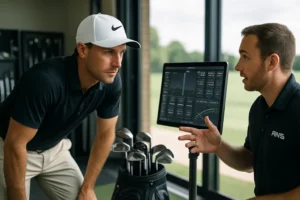
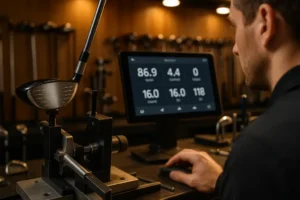
Brand Event Fittings can be useful if you want to test new heads, shafts, and ball flights without paying a studio fee. They are not the same thing as a full paid club fitting. The difference is not just price. It is time, brand choice, fitting depth, spec documentation, and how much room the fitter has to work through your actual miss pattern.
A paid fitting is usually the better choice when you are making a serious equipment decision, especially for irons, wedges, driver, or a full bag. A demo or loaner-style event can still help, but it should be treated as a screening session rather than a complete build plan. Good fitting is not about promising lower scores or instant distance. It is about matching measurable delivery, ball flight, and club specs so the equipment stops fighting the swing you actually bring to the course.
Brand Event Fittings Vs Full Fittings
A full club fitting is a data-led session built around your swing and current equipment. It can include launch monitor readings, comparisons across heads and shafts, loft and lie checks, grip sizing, length questions, and a written spec recommendation. GolfLens describes club fitting as a process that tests variables such as heads, shafts, lofts, lie angles, grips, and launch data around the player’s swing through its golf fitting guide.
A brand event, demo day, or loaner-style fitting works differently. You are usually testing equipment from one manufacturer, often with limited time and a smaller matrix of stock or event-available shafts. That does not make the session bad. It just means the answer you get is narrower. If the brand’s driver line suits your delivery, the session can point you in a useful direction. If another brand’s head shape, loft sleeve, sole design, or shaft catalog would fit you better, the event may not show that.
Related readers might be interested in broader sports discussions, where Scar Sports provides content beyond the scope of club fittings, yet it highlights the decision-making process golfers face when evaluating fitting options.
Where Brand Event Fittings Fit Best
Brand Event Fittings fit best when your goal is comparison, feel, and early screening. Maybe you want to try a new driver family, see whether a current iron head launches high enough, or compare a few shaft weights without booking a longer appointment. For that job, a brand day can save money and give you useful launch-window clues.
The limit is precision. In 20 to 30 minutes, it is hard to baseline your current set, test multiple lengths, compare many shafts, check lie reaction, study dispersion, and talk through gapping. A short event can identify a promising head-and-shaft direction, but it may not settle final build details.
What A Paid Fitting Usually Includes
A paid session gives the fitter more control over the process. The starting point should be your current clubs if you have them. Baseline swings matter because they show what is actually happening now: strike location, launch, spin, peak height, carry, curve, and dispersion. Without that baseline, a new club can feel better simply because it is newer or because you caught a few shots well.
From there, the fitter should work through variables in a logical order. With a driver, that often means head model, loft setting, shaft profile, shaft weight, playing length, and strike pattern. With irons, the important questions often shift toward launch window, descent angle, carry gaps, lie angle, length, shaft weight, and turf interaction. With wedges, gapping and sole fit can matter as much as full-swing numbers.
A stronger paid fitting should also leave you with notes. That could be a spec sheet showing recommended head, loft, lie, length, shaft, flex, grip, and any relevant build comments. Not every shop formats this the same way, and some purchase-credit models may keep the build process inside the shop. Still, you should know what was tested and why a recommendation was made.
Data That Should Guide The Session
The best fitting conversations stay tied to ball flight. Ball speed, spin rate, launch angle, carry distance, descent angle, and dispersion all help explain why one setup is performing better than another. Feel still matters, but feel alone can be misleading, especially indoors or during a short warm-up.
A fitter should also watch the golfer, not just the monitor. Tempo, transition force, face delivery, contact pattern, and comfort over the ball all affect whether a club will travel from the bay to the course. A shaft that produces one perfect shot but feels hard to time may not be the right answer for a player who needs repeatable start lines under pressure.
Cost And Time Comparisons
Cost is where the split gets clear. StickPicker’s 2026 club fitting cost guide lists retail-chain individual club fittings at about $30 to $100, independent or specialist single-club fittings around $75 to $200, retail full-bag fittings around $150 to $300, and national specialist full-bag sessions such as Club Champion or True Spec at about $375 to $475 including putter; the same guide notes that manufacturer demo days are generally free but shorter and brand-specific in its club fitting cost guide.
The free option can still carry a cost in another form: limited context. If a brand day gives you one driver head, two shaft choices, and a few launch readings, you may know whether that driver is worth more testing. You may not know whether the length is right, whether the lie and grip are helping, or whether another brand would tighten dispersion.
Paid fittings can also use purchase credits or fee waivers. Some independent fitters and specialist studios apply the fitting fee toward a club order. That can be fair, but ask before the session starts. You want to know whether the fee is credited only on same-day orders, whether it applies to all clubs or only full builds, and whether you can leave with your specs if you do not buy.
How To Choose The Right Session
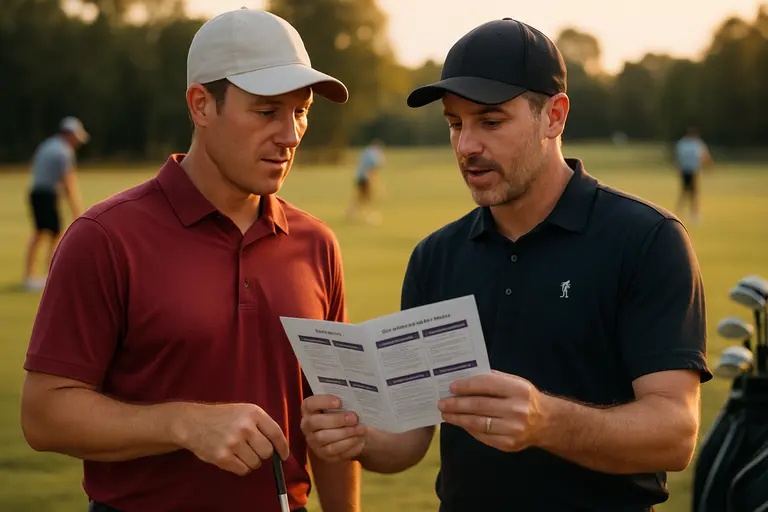
Your swing stage matters. A newer golfer or a player making frequent swing changes may not need a premium full-bag session right away. A basic driver, iron, or putter check can remove extreme mismatches and keep the budget under control. A player with a steadier pattern, older clubs, or a planned investment in a full set has more reason to pay for a longer session.
If you are comparing new releases, a brand day can be a smart first stop. You can learn whether a head shape suits your eye, whether the sound and feel work for you, and whether the launch window is close. If the data looks promising, book a deeper fitting before ordering final specs. If you are checking local calendars, our piece on fitting demo days explains how to approach those sessions without rushing the buying call.
Questions To Ask Before Booking
Ask practical questions before you commit. The answers tell you whether the session matches your needs and whether the quoted price reflects real fitting work rather than a quick sales appointment.
- How long is the appointment, and is warm-up time included?
- Can I bring my current clubs for baseline testing?
- Which launch monitor will be used, and which numbers will we review?
- How many heads and shafts are available for the club type I need?
- Will I receive a spec sheet after the session?
- Is the fitting fee credited toward purchase, and under what conditions?
- Can loft, lie, length, grip size, and swing weight be discussed or adjusted?
Those questions are just as useful at a free event as they are at a paid studio. A clear fitter will explain the limits of the session. If the answer is vague, treat the recommendation as preliminary.
Brand Event Fittings Cost Decision
The smart choice depends on the decision in front of you. If you are curious about one manufacturer’s new line, a free event is a reasonable way to collect first impressions. If you are ordering irons, wedges, or a driver you plan to keep for years, a paid fitting gives you more room to test the specs that affect start line, contact, height, and carry gaps.
Brand Event Fittings are best viewed as a low-cost entry point, not a full replacement for an independent or studio session. They can point you toward a head, confirm that a shaft weight feels reasonable, or show whether a launch window is close. A paid fitting should go further by comparing more variables and giving you a clearer build recommendation.
No fitting format guarantees better scoring. The practical win is confidence in the buying process: fewer blind guesses, fewer clubs chosen only from a rack, and a better record of what actually worked during testing. That is worth paying for when the club decision is big enough, and worth sampling for free when you are still narrowing the field.