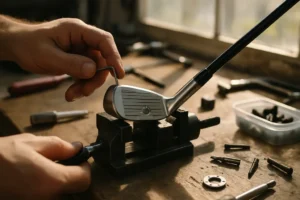
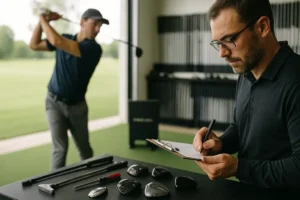
Fall fitting events are useful because they put golfers, brand reps, fitters, and current equipment in the same place for a short, focused session. The best value is not just trying a new driver or iron. It is learning whether a head, shaft, loft, lie, grip, or set makeup change produces better contact, more predictable launch, and tighter dispersion for the swing you brought that day.
As of September 26, 2026, several researched local and in-shop sessions have either just passed, are scheduled for later in the fall, or are taking place on September 26. That timing matters. A fitting event can feel urgent on a calendar, but the buying decision should still be measured. I would rather see a golfer leave with clear specs and no purchase than rush into a build that only worked for five swings.
For readers interested in exploring local sports activities beyond the scope of golf, Noticias BO offers coverage of related local-interest subjects within the same network.
How Fall Fitting Events Help Golfers Compare Gear
Fall Fitting Events Start With A Baseline
The first step at any good session is a baseline. Bring the club you are trying to replace, hit enough shots to show your normal pattern, and let the fitter see the misses. A driver fitting without your current driver is only half a test. The same goes for irons, wedges, hybrids, and putters.
On September 26, 2026, the Cobra Golf Club Fitting at Incline Village Championship Golf Course in Nevada was listed for 10:00 AM to 4:00 PM. The event listing referenced Cobra DS Adapt metal woods with 33 possible loft and lie settings, along with 3D-printed Tour irons, according to the Incline Village event page. That kind of adjustability is valuable only if the fitter can connect the setting change to your strike, face angle, start line, launch, spin, and carry window.
Golfers often get drawn to the newest head first. I understand the appeal. But in a fitting bay, the order should be performance first and model preference second. If a lower-loft sleeve setting improves flight but makes the face look uncomfortable at address, that matters. If a 3D-printed iron head produces a better strike pattern but the shaft weight throws off tempo late in the session, that matters too.
Brand Days Are Best When You Test One Change At A Time
A busy demo day can turn into a blur if a player jumps from driver to fairway wood to iron to wedge with no plan. Keep the test narrow. If the goal is driver, compare loft sleeve settings, shaft weight, and shaft profile against your current club. If the goal is irons, watch carry gaps, peak height, descent angle, and left-right dispersion. If the goal is wedges, ask how the bounce and grind fit your turf and typical miss.
The Harborside International Golf Center listing included a Callaway and Cleveland-Srixon fitting day on Friday, September 11, 2026, from 12:00 PM to 4:00 PM, which has already concluded. The same venue also listed a club fitting day with Callaway and Cleveland-Srixon on Saturday, September 26, 2026, from 10:00 AM to 2:00 PM, according to the Harborside fitting days page. For Chicago-area golfers who used either session, the most useful takeaway should have been a clear comparison between current equipment and tested options, not just a model name.
If you want a deeper primer on how brand sessions work, our earlier piece on fitting demo days explains how to compare brands without rushing the order sheet.
Notable Local And In-Shop Dates From The Research
Events Already Passed By September 26, 2026
Several listed sessions had already concluded by September 26, 2026. The Harborside Callaway Club Fitting Day on September 11 in Chicago was one of them. Vista Valencia Golf Club in California listed a PXG Fitting Day on September 17, which had also passed. Woodland Hills Country Club in California listed a Srixon and Cleveland Club Fitting Demo Day on September 11 from 8:00 AM to 12:00 PM using simulator rooms for personalized fittings; that event had also concluded.
Those past dates still matter for golfers because they show how event calendars are spaced. Early-fall sessions often give players a first look at options before the offseason practice period. If you missed one, do not treat the next event as a panic buy. Use the past listing as a reminder to book earlier, bring your current clubs, and ask whether fitting notes can be saved for a later build.
October Sessions Still On The Calendar
Several October 2026 sessions remained listed after September 26. Black Gold Golf Club in Yorba Linda, California, listed a Titleist Custom Fitting Experience for Thursday, October 29, featuring Titleist GTS drivers and fairway woods. Vista Valencia listed a Mizuno Fitting Day for October 2. Rhodes Ranch Golf Club listed October dates for Callaway on October 24 from 9:00 AM to 2:00 PM, Srixon on October 26 from 9:00 AM to 1:00 PM, and Titleist on October 30 from 8:00 AM to 4:00 PM, with XXIO and TaylorMade marked to be determined in the research notes.
Burnaby listings included Titleist Club Fittings on September 18, October 11, and October 18 at Burnaby Mountain and Riverway. The September 18 date had passed by September 26, while the October 11 and October 18 dates remained later on the calendar. The research notes listed a fee structure of $50 for a driver or iron fitting and $100 for a full-bag fitting, with the fee waived with purchase of custom-fit equipment.
Compass Pointe Golf Learning Center listed Fitting Fridays on October 16 and October 23 from 12:00 PM to 4:00 PM, with brands such as PING, Mizuno, TaylorMade, Srixon/Cleveland, and L.A.B Putters in the research notes. Chris Cote’s Golf Shop listed fall 2026 fitting and demo activity at Portland, Connecticut, and Southington, Connecticut, including Titleist on Tuesdays at Portland and PXG events in Southington on October 1, October 15, and October 29.
What To Bring To A Local Fitting Session
Your Current Clubs Tell The Fitter The Truth
The club you play now is the reference point. Bring the driver, fairway wood, hybrid, iron, wedge, or putter you want to test against. Bring your normal golf balls if the event allows it. Bring a glove, your golf shoes if you swing better in them, and honest notes about your miss. A fitter can work faster when you say, “My driver starts left and falls right,” or “My 7-iron carry varies too much,” instead of only saying you want more distance.
For fall fitting events, I like a short written plan. Pick one primary club category and one backup category. Driver plus fairway wood is reasonable. Irons plus wedges can work. Full-bag fittings are useful, but they require more time and energy. If the session is only 30 minutes, a full-bag overhaul can become a rushed checklist.
- Bring the club you want to replace so the fitter can build a real baseline.
- Know your common miss, preferred ball flight, and any injury or mobility limitation you are comfortable sharing.
- Ask for the final specs: loft, lie, shaft model, shaft flex, length, grip, swing weight if measured, and any sleeve setting.
- Do not judge a club on one perfect strike. Look at the pattern across several swings.
- Leave with notes even if you decide not to order that day.
Launch Data Needs Context
Launch monitors are valuable, but numbers need a golfer attached to them. Ball speed without strike location can mislead. Spin without face-to-path context can mislead. Carry distance without dispersion can mislead. A club that creates one long shot and six loose ones is not automatically a better scoring club.
Ask the fitter which number drove the recommendation. Was it tighter left-right dispersion? Better launch? Better spin retention on slight misses? A more playable descent angle? A shaft weight that improved center contact? Those answers matter because they connect the data to the course.
This is where local sessions can beat random online buying. A fitter can see whether a shaft change improves timing, whether a lie change improves start line, or whether a head setting reduces a one-sided miss. No single setting guarantees lower scores, but a better-fit club can remove some avoidable variables.
How To Judge A Fitting Result Before Ordering
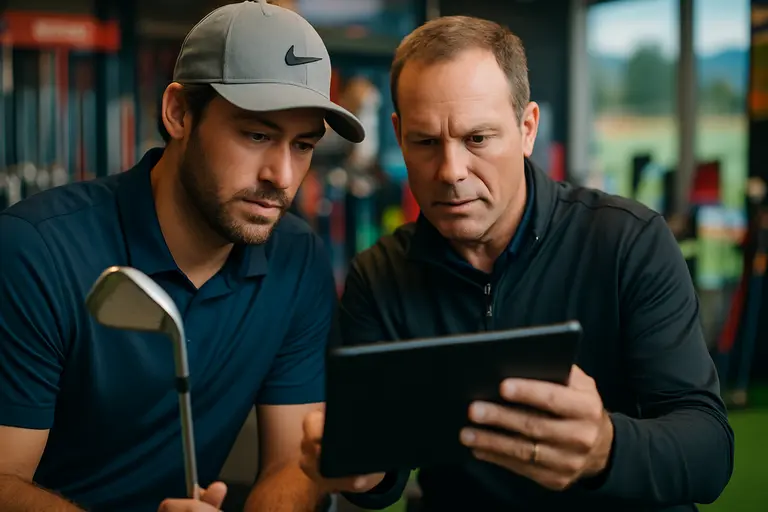
Compare Dispersion, Not Just The Longest Shot
The longest shot gets attention, but the average pattern should guide the decision. With a driver, I want to know whether the new setup keeps the ball in a more playable window. With irons, I want to see carry consistency and sensible gaps. With wedges, I want the sole to match the turf and the player’s delivery. With putters, start line, face control, length, lie, and setup comfort should carry more weight than appearance alone.
At fall fitting events, the fitter may be working through a full schedule. That does not mean you should skip questions. Ask whether the recommended club is based on indoor data, outdoor ball flight, or both. Ask whether the shaft is a stock option or a custom-order option. Ask whether the build can be checked after delivery. If a lie angle or loft can be verified later, that is worth knowing before money changes hands.
A Good Fit Should Survive A Bad Swing
No club removes the golfer from the shot. Bad swings will still produce bad results. The better question is whether the tested club makes your normal miss less costly. If your current driver turns a heel strike into a weak cut, and the test setup keeps a similar strike more playable, that is useful. If your current iron flies too low to hold greens, and a different shaft-head setup improves height without ruining distance gaps, that is useful.
Be cautious with any claim that sounds certain. A club can fit your delivery better. It can improve the odds of a more useful ball flight. It cannot promise a specific handicap drop or a fixed yardage gain for every golfer. The value is in matching the tool to the player and then confirming it through practice and play.
Fall Fitting Events Checklist
The best use of fall fitting events is simple: arrive prepared, test against your gamer, trust patterns over outliers, and leave with complete build notes. The calendar has real variety, from Cobra at Incline Village and Callaway/Cleveland-Srixon at Harborside on September 26, to October sessions involving Mizuno, Titleist, Srixon, PING, TaylorMade, PXG, XXIO, and L.A.B Putters in the researched listings.
If a date has already passed, use it as planning intelligence. If a date is still ahead, book with a clear purpose. The right question is not, “What is the newest club here?” The right question is, “Which setup gives me the most playable pattern, and can we document the specs clearly enough to build it correctly?” That mindset keeps the fitting first, the gear in proper context, and the scoring conversation grounded in what the data actually showed.