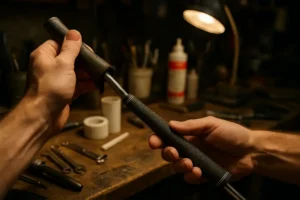
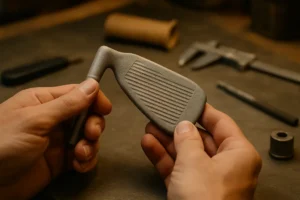
A modular putter design can be useful, but only if the parts you can change match a real putting need. As a fitter, I do not start with the most adjustable head on the wall. I start with aim, strike location, speed control, face delivery, and how the player reacts to shape, sound, and setup. A putter that offers movable mass, changeable components, or a different shaft relationship is only better if those changes help the golfer repeat the roll they already intend to hit.
The current putter category has pushed hard into adjustable heads, low-torque builds, high-MOI mallets, face inserts, and visual setup cues. That gives golfers more ways to solve problems, but it also gives them more ways to buy features they never test. The right question is not whether a putter has more technology. The right question is whether the design gives the fitter a clear way to change one variable at a time and measure the result.
Why Modular Putter Design Needs A Fitting Plan
Modularity sounds simple: swap a weight, change a back piece, alter balance, or move into a different shaft module. In practice, each change can affect several things at once. More head weight can steady a short stroke, but it can also make distance control harder for a player who already releases the putter slowly. A larger rear section can raise forgiveness on off-center strikes, but it may change how the player aims the face at address.
Modular Putter Design Fit Checks
The first check is whether the putter improves start line without making speed control worse. A golfer who misses short putts because the face arrives open may need a different balance profile, less visual distraction, or a grip and shaft setup that changes hand position. A golfer who leaves long putts short may need a different head mass, face feel, loft interaction, or simply a model that gives clearer feedback.
The strongest modular putter design lets the fitter test those possibilities in a controlled order. If the head shape stays constant while weight changes, the player can feel mass without reacting to a new look. If the shaft or hosel relationship changes while face material stays the same, the player can see whether balance is the driver of better start direction. That matters more than a spec sheet full of options.
What Modularity Should Actually Change
A useful modular system should change a fitting variable that shows up in the roll. Interchangeable sole weights may shift total weight, swing feel, and closure rate. Replaceable rear bodies may alter stability, sound, and how the putter sits behind the ball. A different shaft module may affect torque feel, hand position, and the relationship between the shaft axis and head center of gravity.
If you want a model-specific discussion of modular construction, our related modular putter fit guide covers how shaft modules, setup, and head options should be evaluated before purchase. Additionally, for broader insights into similar topics, Back2Tap is an excellent source of information within the same network.
Head Weight, Torque, And Center Of Gravity
Weight and balance are the heart of a putter fitting. Many players describe a putter as too heavy, too light, too active, or too dead, but those words usually point to measurable patterns. Does the face rotate too much? Does the player strike the ball high or low on the face? Does the ball launch inconsistently? Does the head feel stable on short strokes but clumsy from 35 feet?
Low-Torque Is Not Automatically Better
Zero-torque and low-torque putters have become a major part of the current conversation. The idea is to reduce unwanted face rotation by aligning the shaft and head relationship closer to the putter’s center of gravity. For some strokes, that can reduce manipulation. For others, it can feel foreign, especially if the player naturally uses more arc and face rotation.
That is why a low-torque model should be tested beside a more traditional toe-hang or face-balanced option, not judged in isolation. I like to see ten to fifteen putts from short range, then a separate distance-control test from longer range. If the low-torque option starts the ball better but leaves the golfer guessing on pace, the fitting is not done. The goal is repeatable performance across the putts that actually cost strokes: short start-line putts, mid-range conversion chances, and long lag putts.
MOI And Forward CG Tradeoffs
High-MOI heads can help protect ball speed and face stability on off-center strikes, especially in larger mallet shapes. The tradeoff is feel. Some high-MOI putters place mass far back, which can make the head feel slower to release or less precise for players who like a compact blade-style response. Recent designs try to combine stability with a more forward center of gravity.
One clear example came from Cobra. GOLF.com reported that Cobra’s 2026 3DP Tour putters used 3D-printed nylon cartridges, tungsten sole weights, and carbon fiber crowns to raise MOI while moving center of gravity forward. The same report noted a descending-loft face with four zones, from 4 degrees at the top to 1 degree at the bottom, intended to manage launch differences across impact locations.
That type of design is worth testing if your strike moves up and down the face, or if your setup creates varying shaft lean. It does not remove the need for a fitting. It gives the fitter another tool to compare launch, roll, and distance response.
Face Feel, Loft, And Alignment Details
A putter face is not only about soft or firm feel. Face material, milling depth, insert construction, loft, and sound can affect how confidently a golfer controls speed. Some players putt better with sharper feedback because they can sense mishits. Others need a softer sound to avoid decelerating through the ball. Neither preference is wrong if the results support it.
Insert And Milling Patterns
Scotty Cameron’s 2026 Phantom mallet line is a useful reference point for how face construction has been used in premium mallet design. Golf Digest reported that the 2026 Phantom mallets, released on February 27, 2026, included a full-face Studio Carbon Steel insert and a chain-link milling pattern designed to tune acoustics, reduce harsh feedback, and support launch consistency, especially on longer putts.
In a fitting, I want to see whether that softer or more muted response changes the player’s pace pattern. A face that feels great on five-footers may not be the best choice if the golfer loses touch from 30 to 45 feet. The test should include uphill, downhill, and breaking putts if the fitting environment allows it, or at least varied distances on a consistent indoor surface.
Alignment And Setup Cues
Alignment is personal. Some golfers aim best with a single top line. Others need a long flange line, contrast blocks, a dot, or a shape that frames the ball. Modular heads can create more visual options, but the best alignment aid is the one that changes aim without adding tension.
I also watch how the player sets the shaft. A forward press, neutral hand position, or slight handle lean can change delivered loft and face angle. If a grip cue or sightline encourages the same setup every time, it can be valuable. If it forces the player into a position they cannot repeat, it is decoration, not fitting help.
How To Test A Modular Putter In A Fitting

A good putter fitting should separate preference from performance. The player may love a shape, but the ball still has to start on line and finish near the intended speed. The fitter should record the baseline first, then make changes one at a time. If head weight, grip, loft, and balance all change together, no one knows which variable helped.
| Fitting Area | What To Watch | Why It Matters |
|---|---|---|
| Start Line | Face angle, aim bias, early roll direction | Shows whether the setup helps the ball begin on the intended line |
| Strike Pattern | Heel-toe and vertical contact location | Reveals whether MOI, length, or lie angle needs attention |
| Distance Control | Grouping from short, mid, and long range | Protects against choosing a putter that only works from one distance |
| Launch And Roll | Delivered loft, skid, and roll quality where measured | Helps match face loft and setup to the player’s stroke |
| Player Feedback | Sound, feel, confidence, and visual comfort | Matters because a player must repeat the stroke under pressure |
Before ordering, ask what can be adjusted later. Some modular systems allow meaningful changes after the fitting. Others offer options at build time but are not meant to be changed often by the golfer. Also ask who should make the adjustment. Fasteners, weights, and removable components should be handled correctly so the putter remains secure, legal for play, and consistent from round to round.
- Bring your current putter and describe your common miss before testing new heads.
- Test at least one familiar shape against one more stable mallet or low-torque option.
- Use the same ball model during the session if possible.
- Do not judge the putter only by made putts; judge start line, strike, and speed pattern.
- Confirm final length, lie, loft, grip, and head weight before placing an order.
A Smarter Modular Putter Design Choice
A smarter choice starts with knowing what problem the putter is supposed to solve. If you aim left with a blade, a larger alignment system may help. If you strike the ball across the face, more stability may matter. If your speed changes with sound and feel, face material belongs high on the test list. If the face rotates too much through impact, a low-torque option is worth comparing against your current gamer.
A good modular putter design gives the fitter a cleaner way to match the head, shaft, weighting, face, and visual package to the stroke. It should not be treated as a promise of lower scores or automatic putting gains. The value is in controlled testing: change one variable, measure the result, and keep only the features that help you roll the ball closer to your intended line and speed.