New Srixon Driver expectations have moved before the consumer launch because the ZXi RKT family has already been seen in tour use, on the USGA Conforming Driver List, and in high-pressure championship play. That does not prove it will fit every golfer. It does change the questions a good fitter should ask once retail heads, shafts, and final specs are available.
Srixon used the Travelers Championship week as a tour-first reveal for the ZXi RKT driver family on June 22, 2026, showing the heads to PGA Tour staff before a public retail rollout. GOLF.com reported the tour introduction, the visible carbon-fiber shift, and the Acousticore sole marking tied to sound and feel work in its ZXi RKT driver report. That matters because tour seeding is not just a marketing photo. It gives staff players a chance to test head shape, launch window, spin, sound, and start-line bias under tournament conditions.
Why The New Srixon Driver Feels Different Pre-Launch
The unusual part is not that a driver showed up on tour before retail. Major equipment brands do that often. The unusual part is how much expectation has formed before golfers can book a normal off-the-rack demo or compare final consumer builds head-to-head. The research notes point to Ryan Fox winning The Open Championship at Royal Birkdale in July 2026 with a prototype ZXi RKT LS+ that had not yet reached the consumer market. That is a strong talking point, but in fitting terms it still needs restraint.
A major win tells us a prototype can survive elite pressure in the right player’s hands. It does not tell a 10-handicap golfer which loft, shaft, weight setting, or model is right. Tour validation can narrow attention, but it cannot replace a strike pattern test, launch-monitor readout, and ball-flight review.
Tour Use Is A Starting Point, Not A Fit
For fitters, the early tour presence creates a better opening conversation. A golfer may walk in already asking for the head. The fitter’s job is to turn that interest into useful testing: where the golfer strikes the face, whether spin is too high or too low, how face angle affects start direction, and whether a draw-leaning or neutral setup makes the miss tighter.
That distinction is where expectations often get messy. A low-spin head that works for a tour player can be too punishing for a golfer who already launches it low. A high-MOI head can improve playable dispersion for one player but feel visually bulky or launch too high for another. The product story may start on tour, but the scoring story starts with fit.
What The Model Split Signals To Fitters
The ZXi RKT line shown before retail includes three core models: the standard ZXi RKT, the ZXi RKT Max, and the ZXi RKT LS. MyGolfSpy reported that three new Srixon drivers appeared at the Travelers Championship and also noted their simultaneous appearance on the USGA Conforming Driver List on June 22, 2026, in its Travelers equipment coverage. A reported LS+ prototype adds another wrinkle, even if that version is not confirmed as a standard consumer option.
The model split suggests Srixon is giving fitters clearer lanes. The Max version is described in the research as Srixon’s highest-MOI driver to date, built around a rear sole weight and a more stable back-weighted shape. The LS version points toward lower spin. The standard head likely sits between those fitting lanes, though final consumer specs should decide how it compares in launch, spin, and forgiveness.
Head Choice Should Follow Miss Pattern
The first test should not be which head looks fastest. It should be which head manages the golfer’s common miss. A golfer who loses the ball high-right may need help with launch, closure rate, and strike location before chasing a low-spin build. A golfer who hits high-spin cuts may test the LS path, but only if ball speed, launch, and carry window remain playable. A golfer who hits the center less often may find the Max profile worth serious testing because stability across the face can matter more than one perfect strike.
This is also where carbon construction becomes relevant. The research notes point to more carbon fiber in the new heads versus prior Srixon driver generations, with mass saved and moved toward CG and weighting goals. That is useful only if the final head gives the golfer better launch, spin, and dispersion. Carbon by itself is not a fitting result; it is a design tool.
Fitting Questions Before Retail Specs Arrive
Before final retail specs, pricing, and release timing are official, golfers should avoid building a purchase decision from partial information. As of September 22, 2026, the research notes do not include a firm public retail launch date or confirmed retail price for the new line. That uncertainty matters because a real fitting depends on the final heads, final stock and custom shaft options, final loft matrix, and the way the adapter settings are delivered to shops.
New Srixon Driver Questions For A Fitting Bay
A smart test plan for the New Srixon Driver should start with a gamer baseline. Bring the current driver, the ball normally played, and recent on-course misses. The fitter should capture club speed, ball speed, launch angle, spin rate, carry, total distance estimate, peak height, descent angle, face-to-path, and impact location. Then the Srixon heads can be compared against the existing club rather than against memory.
The research notes also flag a 1.5-degree adjustable hosel for loft, lie, and face angle in the ZXi family. If that adjustability carries through the retail fitting matrix, it gives the fitter more room to manage start direction and launch without immediately changing shafts. The caution is that hosel changes interact. Adding loft can close face presentation for some players. Flattening or making a setup more upright can change start line. A good session tests one variable at a time.
For readers interested in detailed sports analyses, the network at Books on Baseball emphasizes the same principle: separating significant insights from mere distractions is vital.
How Golfers Should Read Tour Validation
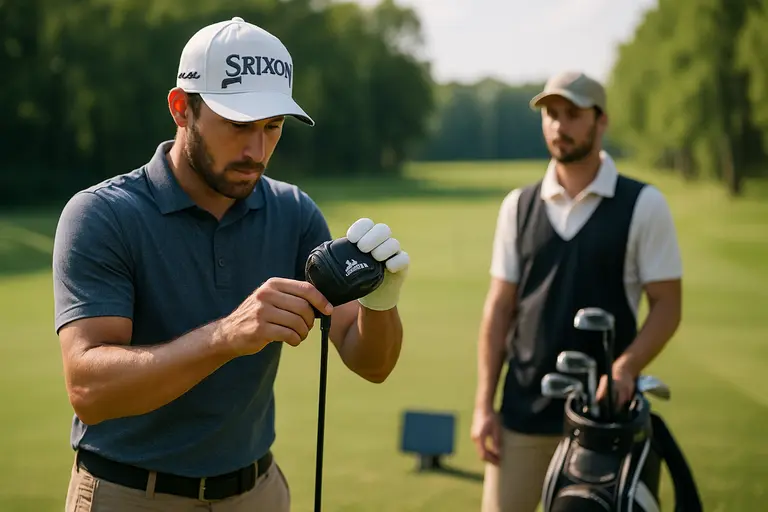
The New Srixon Driver story is a useful reminder that tour seeding creates attention before retail access. That lag can be healthy if it gives fitters more time to study model intent and gives consumers time to ask better questions. It can be risky if golfers treat a tour win as proof that one head will solve their driving.
Tour players also test differently. They see narrow windows, ask for exact face angles, and may move between heads based on one launch condition. Many recreational golfers need a wider playable window. In a fitting bay, the best driver is rarely the one that produces the single longest ball. It is the one that keeps useful speed while reducing the destructive miss.
- Start with dispersion: left-right width and playable misses matter more than one peak number.
- Check spin stability: low spin is helpful only if launch and carry stay reliable.
- Watch strike location: heel, toe, high-face, and low-face patterns should guide head and shaft choices.
- Test sound and feel: Acousticore attention suggests Srixon knows feel matters, but each golfer should judge it during real swings.
If you want a wider fitting frame before comparing drivers, our piece on custom fitting trends explains why more golfers are using data and repeat testing before committing to premium gear.
What The New Srixon Driver Means For Fitting
What stands out most is not one promised number. It is the direction of the driver category. The New Srixon Driver arrives with a clearer model spread, visible carbon-fiber emphasis, more attention to sound, and enough tour usage to make golfers curious before the retail launch. That combination raises expectations, but it also raises the standard for fitting.
If the New Srixon Driver reaches shops with the model lanes suggested by the tour heads, golfers should test it as a system: head, loft, sleeve setting, shaft, length, swing weight, grip, and ball. The Max head should be judged by stability and launch help. The LS head should be judged by whether it lowers spin without shrinking the playable window. The standard head should be judged by how well it balances speed, launch, and forgiveness for the broad middle of golfers.
The best expectation is not automatic distance or lower scores. The fair expectation is that Srixon has created a more serious fitting conversation before launch. Once the retail line is official, the right test will be simple: does one of these heads produce better, more repeatable driver shots than the club already in the bag?