The next Harborside fitting days give Chicago-area golfers a chance to test current demo clubs with brand staff on site before deciding whether a purchase makes sense. As of September 7, 2026, Harborside International Golf Center lists three vendor sessions: Callaway Golf and Cleveland Srixon Golf on September 11, 2026, from 12:00 PM to 4:00 PM, plus another Callaway Golf session on September 26, 2026, from 10:00 AM to 2:00 PM.
The practical appeal is simple: you can compare your current clubs against demo options in a practice setting, ask fitting questions in real time, and avoid guessing from a spec sheet alone. That does not mean every golfer should expect a dramatic change. A good fitting day is useful because it narrows choices: loft, shaft feel, head shape, lie angle discussion, and gapping can all become easier to understand when you hit shots instead of only reading product descriptions.
Harborside Fitting Days Schedule And Vendors
Harborside Fitting Days At A Glance
The Harborside fitting days are vendor-led sessions held at Harborside International Golf Center, 11001 S. Doty Avenue East, Chicago, IL 60628. Harborside’s official demo days calendar lists the September 2026 dates, times, vendors, and registration links for each session.
The key detail is that the September 11 date has two vendors during the same time window. That can be useful if you are open-minded about brand, but it also means you should be clear about which registration link you use. A Callaway time slot and a Cleveland Srixon time slot are not the same appointment, even if they happen on the same afternoon.
What The Vendor Format Means
A vendor fitting day is not the same as a full independent studio fitting with every major head and shaft combination on the wall. The focus is the brand that brought the equipment. That can still be productive, especially if you already like a certain look or product family, but it is best approached as a structured test rather than a promise that one brand will solve every equipment issue.
Expect to hit demo clubs, compare feel, and talk through basic fitting variables such as shaft selection, loft, lie, club length, and set makeup. The brand expert’s job is to help you make better sense of the options available that day. Your job is to bring enough context so the session is not starting from zero.
How To Book Harborside Fitting Days
Use The Right Registration Link
Pre-registration is required for each listed fitting day. That matters because these are short windows, not all-day open ranges. The September 11 sessions run from noon to 4:00 PM, while the September 26 Callaway session runs from 10:00 AM to 2:00 PM. Vendor hours are specific to the staff and demo equipment available for that event.
Before booking, decide whether your priority is driver, fairway wood, hybrid, irons, wedges, or a broader set check. You may not have time to test everything well in one appointment. Golfers who arrive with one or two clear goals usually get more useful feedback than golfers who ask to hit every head in the bag.
What To Bring To Your Appointment
Bring your current clubs, especially the club category you plan to test. If you are looking at irons, bring your current 7-iron and one longer or shorter iron if possible. If you are testing driver, bring your current driver. A fitter can learn more when there is a baseline: ball flight, strike tendency, launch window, comfort at address, and the miss you see most often on the course.
- Your current club or clubs: needed for realistic comparison.
- Golf glove and shoes: keep the session close to normal playing conditions.
- A short goal list: examples include higher launch, better wedge gaps, or less left-right curve.
- Payment method: useful if you choose to place a custom order or buy through the vendor process.
- Recent ball-flight notes: write down your common miss before you arrive.
If you are new to fittings, the prep step can feel more confusing than the hitting itself. A simple primer like beginner club fitting preparation can help you decide what to bring and how to think about the data without getting buried in numbers.
Practice Facility Fit And Testing Value
Why The Setting Helps
Harborside’s practice facility is listed in the research notes as a 57-acre setup with target greens, bent-grass tees and fairways, plus separate chipping, pitching, and sand areas. That type of setting can help because club testing should not be limited to whether one shot feels good. You want to see repeated ball flight, turf interaction, and whether the club still behaves when your swing is slightly off.
The full-swing area is especially relevant for driver, fairway woods, hybrids, and irons. For wedges, the chipping and pitching areas can matter just as much as full swings. A wedge that produces a strong full-shot number may still be the wrong fit if the sole shape, bounce, or leading-edge feel does not work from the turf and sand you normally play.
What To Watch During Testing
During Harborside fitting days, do not judge a club by the best shot only. Pay attention to the pattern. A slightly shorter but tighter driver pattern may be more useful than a driver that produces one big ball and several misses. With irons, watch height, start line, and whether the carry distance fits the rest of your set. With wedges, ask how loft and bounce choices affect the shots you actually use.
This is also where build details start to matter. Shaft weight, flex profile, lie angle, loft, and grip size are not trivia; they influence how the club returns to the ball. Golf equipment is still a physical build, not only a brand choice. For readers who like the manufacturing and design side of equipment, CAD/CAM network coverage offers related perspective on how products are designed and made.
Pricing, Purchases, And Realistic Expectations
No Published Flat Attendance Fee
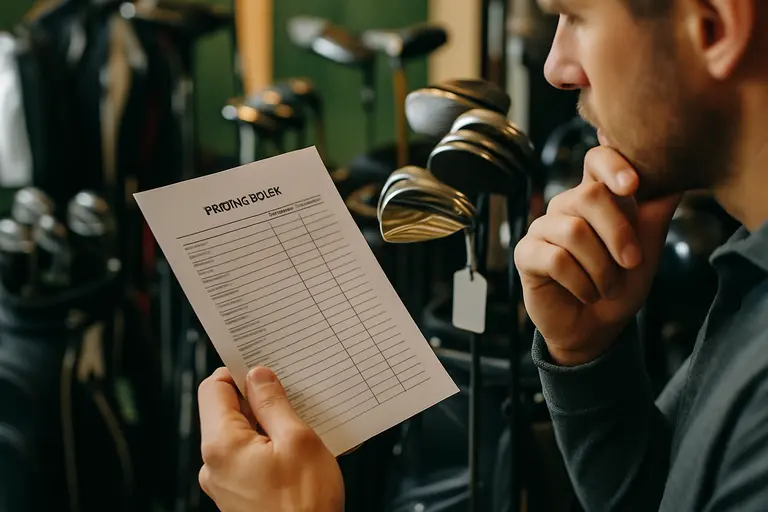
The research notes do not show a published flat fee for attending these fitting days. Purchases, if you decide to buy clubs or components, are separate and priced through the vendor or order process. That distinction is worth keeping clear. A fitting appointment can help you decide, but it does not require you to treat every good shot as a buying signal.
Ask direct pricing questions before placing any order. Confirm the club head, shaft, grip, length, loft, lie, and any custom build charges before you approve the purchase. If a vendor special is available, ask what is included and what changes the price. Good pricing transparency is not awkward; it is part of a sound fitting process.
What A Fitting Day Can And Cannot Prove
A fitting day can show whether a different club setup gives you a better starting point. It can highlight a poor shaft match, a lie angle that makes start line harder, or a loft setup that creates awkward gaps. It can also show that your current club is not the problem. That is still a useful outcome.
What it cannot do is guarantee lower scores, fixed contact, or instant distance gains. Equipment has to work with your swing, and your swing changes from day to day. The best use of the session is to gather evidence: what launched better, what curved less, what felt repeatable, and what the fitter recommended based on the shots you hit.
Harborside Fitting Days Decision Checklist
Who Should Register
Register if you are already considering a club change, if your current set has obvious gapping issues, or if you have not been fit in several seasons and your swing, speed, or playing goals have changed. The Harborside fitting days are also a sensible option for golfers who want brand-specific input from Callaway or Cleveland Srixon staff without committing to a full bag purchase before testing.
Be cautious if you are in the middle of a major swing change or if you are only chasing one number. Fitting works best when the fitter can see your normal pattern. If your swing feels unusually off that day, say so. A good session should account for real-world golf, not only the best three swings you make on the range.
How To Leave With Useful Answers
Before you leave, write down the recommended specs and the reason behind them. Do not rely on memory. Ask which club performed best, what tradeoffs the fitter saw, and whether the recommendation affects the rest of your set. For example, a stronger iron loft may create a wedge gap that needs attention later.
Treat these September dates as a chance to learn first and buy second. If the club is clearly better for your pattern and the price is clear, ordering may make sense. If the result is close, take the notes home and compare calmly. That fitting-first mindset is the safest way to get value from the event without turning a short appointment into a rushed equipment decision.