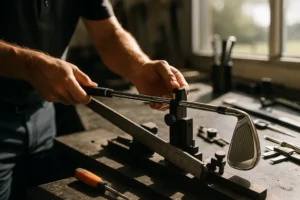
Premium club fitting is getting easier to find for golfers who already use online booking tools. GolfNow and GOLFTEC announced on February 3, 2026 that GOLFTEC club fitting reservations would be added to GolfNow’s online marketplace, with the rollout starting at nearly 200 GOLFTEC locations across the United States. For golfers, the practical change is simple: a fitting session becomes more visible beside the kind of tee-time booking many players already understand.
That does not mean every golfer needs new clubs, and it does not mean a fitting guarantees lower scores or extra yards. It means the path into a serious fitting bay is a little clearer. The useful part is access: more golfers can compare availability, book a session, and walk in with a better idea of what the process costs and what data will be reviewed.
How Premium Club Fitting Moves Online
What Premium Club Fitting Booking Changes
The GolfNow and GOLFTEC arrangement puts club fitting reservations into a marketplace known mainly for tee times. According to the announcement, GolfNow’s marketplace is used by more than 3.5 million registered users, and the GOLFTEC booking option launched at nearly 200 locations in the U.S. GolfNow’s announcement also says GOLFTEC fittings use launch monitors to evaluate numbers such as ball speed, spin rate, and launch angle.
From a fitting-shop point of view, that matters because the first barrier for many golfers is not the session itself. It is knowing where to go, how to book, and what kind of service they are signing up for. A player who has never been fit may assume the process is only for low-handicap golfers or competitive players. In reality, a fitting can be useful any time the golfer needs to check whether the club is helping or fighting the motion they already bring to the ball.
The online booking angle also helps golfers treat the session like an appointment rather than a vague retail stop. A good fitting needs time, clean data, and conversation. The fitter should see enough swings to understand strike pattern, launch behavior, and dispersion. The golfer should be honest about ball flight, miss tendency, budget, and how often they play.
Access Is Not The Same As A Prescription
More access is useful, but it should not be confused with an automatic answer. Launch monitor numbers are inputs. They are not a script. Ball speed, spin rate, and launch angle can point the fitter toward better options, but the final recommendation still has to make sense for the golfer’s delivery, comfort, set makeup, and budget.
That is why the best value in premium club fitting is often clarity. A session may confirm that a current driver is fine. It may show that lie angle needs attention. It may point toward a shaft weight or head style that controls dispersion better. It may also show that lessons should come before a large equipment purchase. None of those outcomes should be treated as a failed fitting. Good information keeps golfers from guessing.
Golfers comparing different fitting options may also want to understand how data-led platforms are changing the first stage of equipment selection. Our look at the Wilson FitAi platform explains how launch monitor data and fitter input can work together without turning the process into an automatic promise of better play.
Pricing Signals Golfers Should Read Carefully
The Posted GOLFTEC Fitting Price
Pricing transparency is the part golfers should slow down and read. GOLFTEC’s pricing page says it offers a free club fitting with a club purchase; without a purchase, the fitting is $150. The same page also lists lesson plan options, including a 12-month game plan with up to 52 lessons, club fittings, and practice sessions. See the posted details on GOLFTEC plans and pricing.
That structure is common enough in golf retail that players should understand the tradeoff before they book. A fitting tied to a purchase can make sense when the golfer is already ready to buy and trusts the recommendation. Paying separately can make sense when the golfer wants the evaluation first, needs time to compare, or may decide not to buy clubs that day.
The key is to know which lane you are in. If you are testing a driver because your current launch and spin are poor, a purchase may be likely. If you are unsure whether the problem is the club, the swing, or contact location, paying for the fit as a stand-alone service may feel cleaner. Neither approach is automatically better. The better choice is the one that matches your intent before the first swing.
Premium Club Fitting Without Guesswork
Premium club fitting has the most value when the golfer walks in with clear questions. Do you need more playable launch? Are your irons missing left because of delivery, lie angle, or face control? Are your wedges gapped properly from your highest-lofted iron? Is the putter fit built around stroke and setup, or just looks?
Those questions keep the session grounded. They also help the fitter avoid wasting time on gear that does not fit the job. A golfer who says “I want a 9-degree driver because my friend hits one” has not given the fitter much to work with. A golfer who says “my common miss is a low heel fade and I want to understand launch and spin” gives the session a useful starting point.
- Bring your current clubs so the fitter can compare baseline numbers.
- Use your normal golf shoes or footwear close to what you play in.
- Be honest about budget before testing options.
- Ask whether the fee changes if you buy clubs after the session.
- Take notes on recommended specs rather than relying on memory.
What The Fitting Data Can And Cannot Tell You
Launch Monitor Numbers Need Context
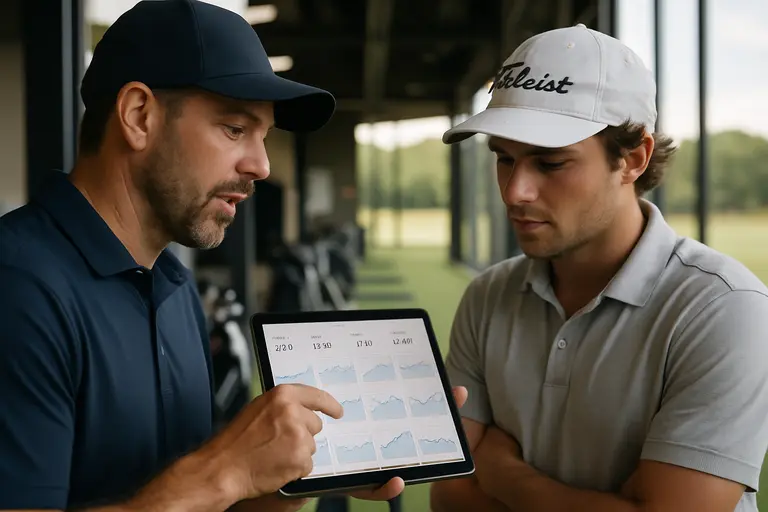
The research notes tied to the GolfNow and GOLFTEC announcement mention ball speed, spin rate, and launch angle. Those are useful data points, but they do not tell the whole story by themselves. A driver can produce strong ball speed and still be a poor match if the dispersion pattern is too wide. An iron can launch nicely and still fail if it does not blend into the rest of the set.
A fitter should look for patterns, not single swings. One flushed 7-iron does not prove a shaft is right. One bad strike does not prove it is wrong. The better question is what happens across a reasonable batch of shots: where the ball starts, how it curves, how high it flies, how it lands, and whether the golfer can repeat the feel.
That is also where a lesson business and fitting business can overlap in a good way. GOLFTEC is known for instruction as well as equipment work, and its listed plans connect lessons, practice, and fittings. A golfer with a fast-changing swing may need to be careful about buying clubs based on one temporary pattern. A golfer with a stable pattern may be ready for a tighter equipment match.
Fit The Set, Not Just The Favorite Club
Many golfers book a fitting because one club is bothering them. That is normal. The driver gets blamed for big misses, and the putter gets blamed for visible frustration. Still, a good session should keep the whole bag in mind. A new fairway wood can create a gap problem. A stronger iron loft can crowd the long end of the set. A wedge change can affect full swings, partial shots, and bunker play.
For golfers who like seeing how different shops handle access and build choice, our note on Orlando club fitting covers another appointment-first model built around launch-monitor sessions and equipment options.
There is also a consumer-education side to online booking. Golfers are going to compare services more often as fitting appointments sit closer to tee times and lesson plans. If you’re interested in a related site in the same network, Wikiapp serves as a useful reference point for readers who track digital services and online discovery tools.
GolfNow And GOLFTEC Booking Takeaways
The GolfNow and GOLFTEC partnership is mostly an access story, but it has a real pricing-transparency angle. Golfers can now find GOLFTEC fitting reservations through a familiar online marketplace, while GOLFTEC’s posted pricing gives a clear starting point: free with a club purchase or $150 without one, based on the company’s pricing page.
The smart move is to treat premium club fitting as a decision process, not a shopping shortcut. Know your goal, bring your current clubs, ask what the numbers mean, and make sure the recommended build fits both your ball flight and your budget. If the data says your current setup is workable, that is useful. If it points to a better match, ask why and compare the recommendation against your actual playing needs.
Premium club fitting is more accessible because of this booking partnership. The golfer still has to make the session count. Clear questions, honest budget talk, and careful reading of the fitting fee will do more for the buying decision than chasing a club because it looked good for three swings.